
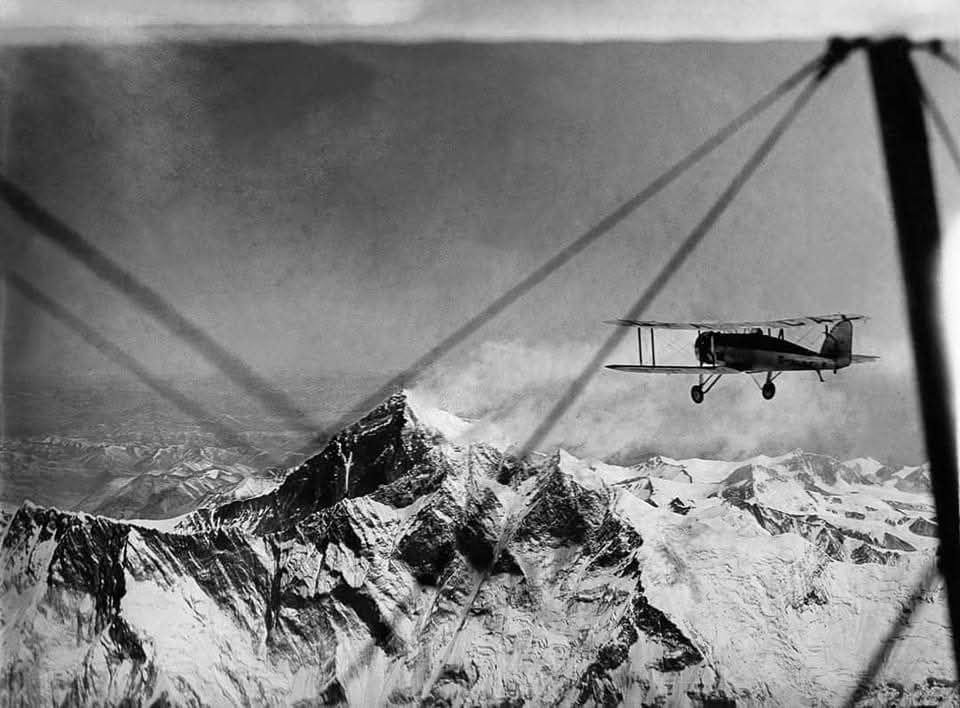

The 1933 flight over Mount Everest is remembered as a historic day in aviation and Himalayan exploration, when British airmen became the first to cross above the world’s highest peak.
The mission, part of the Houston–Mount Everest Expedition, was piloted by Marquess of Clydesdale (later Duke of Hamilton) and Flight Lieutenant David McIntyre, the two aviators who flew directly over the Everest summit during the expedition’s pioneering flights in April 1933.
They were accompanied by key expedition members including Colonel Stewart Blacker, who served as chief observer, and Air Commodore P. F. M. Fellowes, who led the expedition’s operations. The broader team also included Colonel P. T. Etherton and technical specialists responsible for aerial photography, navigation, and scientific data collection.
The first successful flight over Everest took place on April 3, 1933, followed by a second on April 19, with aircraft flying above 30,000 feet in extreme conditions. The mission was aimed to conduct aerial surveys and capture photographic data of terrain that had never been mapped from above.
As detailed in the expedition records, the operation required months of preparation, including securing rare permission from Nepal and developing specialized oxygen systems and cameras capable of functioning in the thin, freezing air of the upper Himalaya.
More than 90 years on, the names of Clydesdale and McIntyre remain in history as the first men to fly over Everest—transforming exploration from the limits of the mountain slopes to the vast possibilities of the sky.