

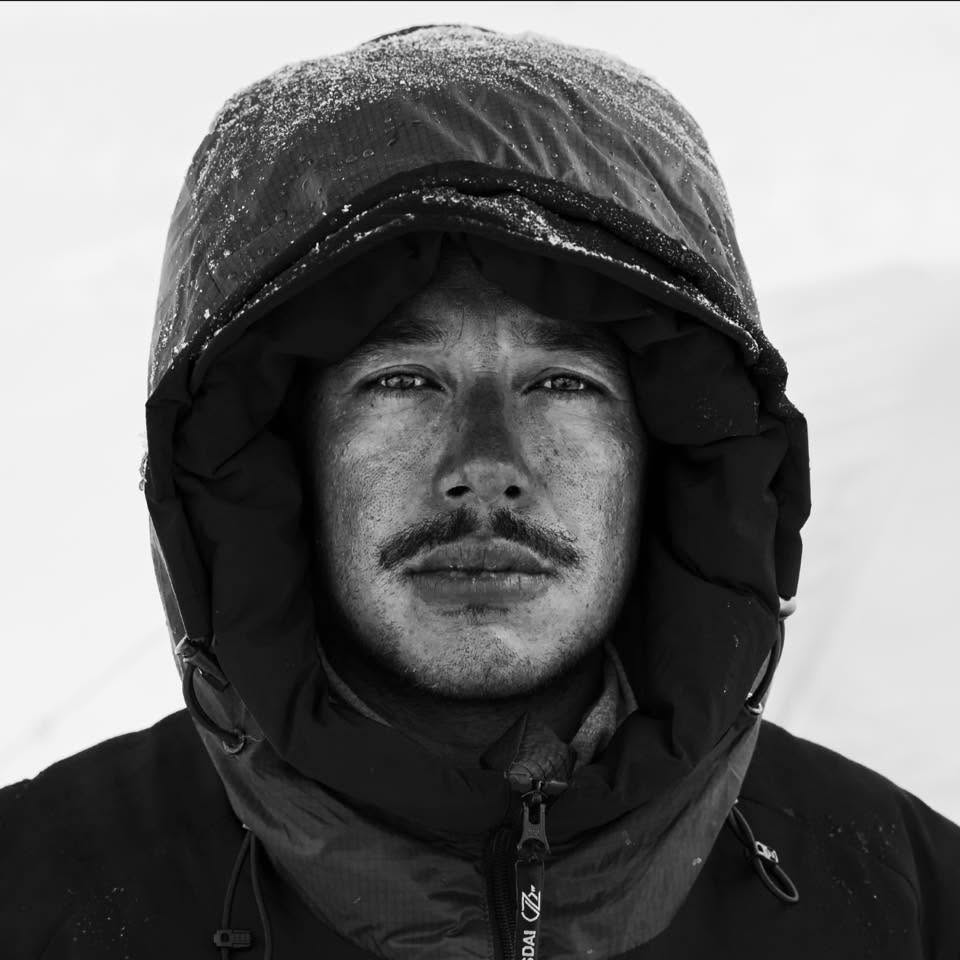

Nirmal “Nimsdai” Purja was a soldier, record-breaker, rescuer, entrepreneur and one of the most influential, and polarising figures of modern mountaineering. He changed how quickly the world’s highest mountains could be climbed and who stood at the centre of Himalayan stories.
Nirmal “Nimsdai” Purja, the Nepal-born mountaineer who compressed the pursuit of the world’s fourteen eight-thousanders from years into months, died in an avalanche on Broad Peak in Pakistan on 30 July 2026. He was 43.
The avalanche swept away a ten-member international team at around 6,600 metres. His death was confirmed by Elite Exped, the company he co-founded, on 1 August. A Nepali-Pakistani ground team later recovered his body at approximately 5,700 metres, together with the bodies of Kili Pemba Sherpa, Nima Sherpa and Chinese climber Wang Zhong. All ten members of the expedition died. According to the Alpine Club of Pakistan, the recovery operation took place in extremely dangerous terrain and difficult weather.
Purja was born on 25 July 1983 in Dana, Myagdi, and grew up largely in Chitwan. His father and three older brothers served as Gurkhas. He followed the same path, joining the British Army and serving for six years as a Gurkha before becoming the first Nepali accepted into the Special Boat Service, an elite unit of the Royal Navy. His military career lasted around 16 years, including ten years in the special forces. In 2018, Queen Elizabeth II appointed him an MBE for his achievements in extreme high-altitude mountaineering.
He began climbing comparatively late. His first major Himalayan climb came in 2012, at the age of 29. He reached his first eight-thousander, Dhaulagiri, in 2014 and climbed Everest in 2016. In 2017, he helped lead the Gurkha Everest Expedition before setting speed records across Everest, Lhotse and Makalu.
Then Nimsdai launched Project Possible.
To finance the project, Purja left the military, gave up his pension and put his home and financial future at risk. Beginning with Annapurna on 23 April 2019 and finishing on Shishapangma on 29 October, he completed the fourteen-peak sequence in 189 days, six months and six days. At the time, South Korean climber Kim Chang-ho’s record stood at seven years, ten months and six days.
Purja climbed six eight-thousanders in Nepal within 31 days, all five of Pakistan’s eight-thousanders in 23 days, and Everest, Lhotse and Makalu within 48 hours and 30 minutes. His photograph of the long queue near Everest’s summit became one of the defining images of modern commercial mountaineering.
The achievement belonged not only to Purja. Mingma David Sherpa, Geljen Sherpa, Lakpa Dendi Sherpa, Gesman Tamang, Tensi Kasang Sherpa, Halung Dorchi Sherpa and other powerful Nepali climbers carried essential responsibilities across the project. Purja’s great strength was partly physical, but it was also his ability to assemble strong teams, organise complex logistics and move quickly between mountains.
His style was always debated. He used bottled oxygen, fixed ropes, established routes and helicopters between mountains. Traditional alpinists argued that Project Possible was as much a breakthrough of logistics as climbing. Later research also concluded that he had stopped short of the strict geographical summits of Manaslu and Dhaulagiri during the 2019 sequence. He returned to both mountains in 2021, and Guinness World Records subsequently reclassified the original record. In 2023, Kristin Harila and Tenjen Lama Sherpa completed all fourteen peaks in 92 days.
But records were only part of what changed.
For decades, the pursuit of the world’s fourteen eight-thousanders had been measured in years. Then Nimsdai reduced that timeline to months and shattered the limits of what people believed possible. Some of his records were broken, but something greater remained: young climbers and ordinary dreamers began to see the impossible as a challenge they could one day face themselves. He became a trendsetter of modern mountaineering who redefined its speed, style and ambition.
As Everest Today wrote in an earlier reflection, before Nims, fourteen eight-thousanders in less than a year sounded impossible. After Nims, a new generation began planning in months and weeks.
One of the moments that best captured his spirit came on 16 January 2021. Purja and nine fellow Nepali climbers made the historic first winter ascent of K2, the last eight-thousander that had never been climbed in winter. The climbers waited below the summit, joined together and stepped onto the top as one team while singing Nepal’s national anthem. Purja completed the ascent without supplementary oxygen.
It was more than a summit. It was a declaration of Nepali courage, unity and pride. Among the ten climbers standing together that day was Kili Pemba Sherpa, who would lose his life alongside Purja on Broad Peak five years later.
Purja also proved that his ambition did not always come before another person’s life. During Project Possible, he helped rescue Malaysian climber Chin Wui Kin from Annapurna after he had remained stranded for around 40 hours without food, water or oxygen. Chin later died in hospital, but Purja’s decision cost valuable time and energy. Weeks later on Kangchenjunga, Purja and his teammates surrendered their own oxygen while trying to save stricken climbers high in the death zone. “You can’t call yourself a climber and not help,” he later said.
The Netflix documentary 14 Peaks: Nothing Is Impossible carried his story into homes across the world. His memoir, Beyond Possible, extended that message. More importantly for Nepal, he helped move Nepali climbers from the margins of Himalayan storytelling to the centre of the global stage. His teammates were presented not as anonymous support workers but as elite athletes, leaders and record-setters in their own right.
Purja continued pursuing records after Project Possible. On 4 October 2024, he completed all fourteen eight-thousanders without supplementary oxygen in two years, four months and 28 days. By July 2026, his own published tally stood at 57 successful ascents of eight-thousanders, including 29 without bottled oxygen. He was attempting a third circuit of the fourteen peaks and working towards becoming the first person to complete all fourteen twice without supplementary oxygen when he died.
Beyond records, Purja tried to return something to the communities that made Himalayan mountaineering possible. Established in 2022, the Nimsdai Foundation supported education, environmental work, disaster relief and rehabilitation programmes. Its Big Mountain Clean Up teams reported removing 500 kilograms of waste from Manaslu, 632 kilograms from Everest and 492 kilograms from K2.
The foundation’s most visible project was the Porter House in Lobuche, formally opened in June 2026. Built at around 5,030 metres, it was designed to provide safe and dignified accommodation for as many as 100 porters on the Everest Base Camp trail. The foundation also supported scholarships, rural infrastructure and relief following disasters in Nepal and Pakistan. Colleagues have also credited Purja with privately helping Nepali climbers who lacked the money to pursue their own high-altitude ambitions. The foundation describes its work as serving the mountains and the people who depend upon them.
His public record, however, cannot be written only through achievements.
In September 2022, a fire and explosions destroyed the rented Kathmandu building housing Elite Exped’s office. Three staff members, Ashok Wenjha Rai, Karsang Tenjing Sherpa and Tsewang Sherpa were killed. Reports said LPG and oxygen cylinders had been stored inside the property. In January 2026, the Patan High Court upheld an order requiring Elite Exped to pay the building owner NPR 11.3 million in damages. The company said it would appeal to the Supreme Court. The court case concerned damage to the property, but the deaths and questions about responsibility and support for the victims’ families remained a painful part of the company’s history.
His operations also faced scrutiny in 2024. Nepal’s Department of Tourism investigated allegations that an unauthorised helicopter carried Purja directly to Everest’s Camp II and that people connected to Elite Exped entered high camps without the required permits. The same season, Purja claimed fixed ropes above Everest’s Balcony had been deliberately cut. Other expedition operators disputed his account, while Purja later released video that he said supported it. The controversy led to another government investigation.
The most serious allegations concerned his conduct towards women. In May 2024, Finnish climber Lotta Hintsa and American physician April Leonardo gave on-record accounts to The New York Times, accusing Purja of unwanted kissing, touching and aggressive sexual advances in separate incidents connected to a 2022 K2 expedition and a 2023 meeting in Kathmandu. Purja unequivocally denied the accusations through his lawyers, calling them false and defamatory and arguing that important context had been omitted. Several sponsors ended their relationships with him, while leading climbers publicly supported the women. The claims remained disputed, but they became an unavoidable part of his public legacy.
Purja was never an uncomplicated figure. His confidence inspired millions and angered others. His methods changed commercial high-altitude climbing while also intensifying debates over oxygen, helicopters, fixed ropes, risk, celebrity and the growing race for records. His life contained extraordinary courage, restless ambition, generosity, painful failures and serious unresolved questions.
An honest obituary should neither erase those controversies nor allow them to erase everything he changed.
Nims lived boldly and dreamed beyond accepted limits. He made the world understand that Nepali climbers were not supporting characters; they were the heroes of their own stories. He showed that they could lead the strongest teams, organise the largest expeditions, make their own films, build global companies and define the direction of modern mountaineering.
Records will continue to fall. His style will continue to be debated. But his impact cannot be separated from the era that followed him. Before Nims, they counted years. After Nims, they counted months.
Everest Today extends its deepest condolences to his wife Suchi, his daughter Himani, his family, friends, teammates and everyone whose life he touched. We also remember Kili Pemba Sherpa, Nima Sherpa, Pur Bahadur Gurung “Yukta,” Nadhira Al Harthy, Mallory Geis, Wang Zhong, Sohail Sakhi and every climber lost in the Broad Peak tragedy.
Rest in peace, Nimsdai.
ཨོཾ་མ་ཎི་པདྨེ་ཧཱུྃ!


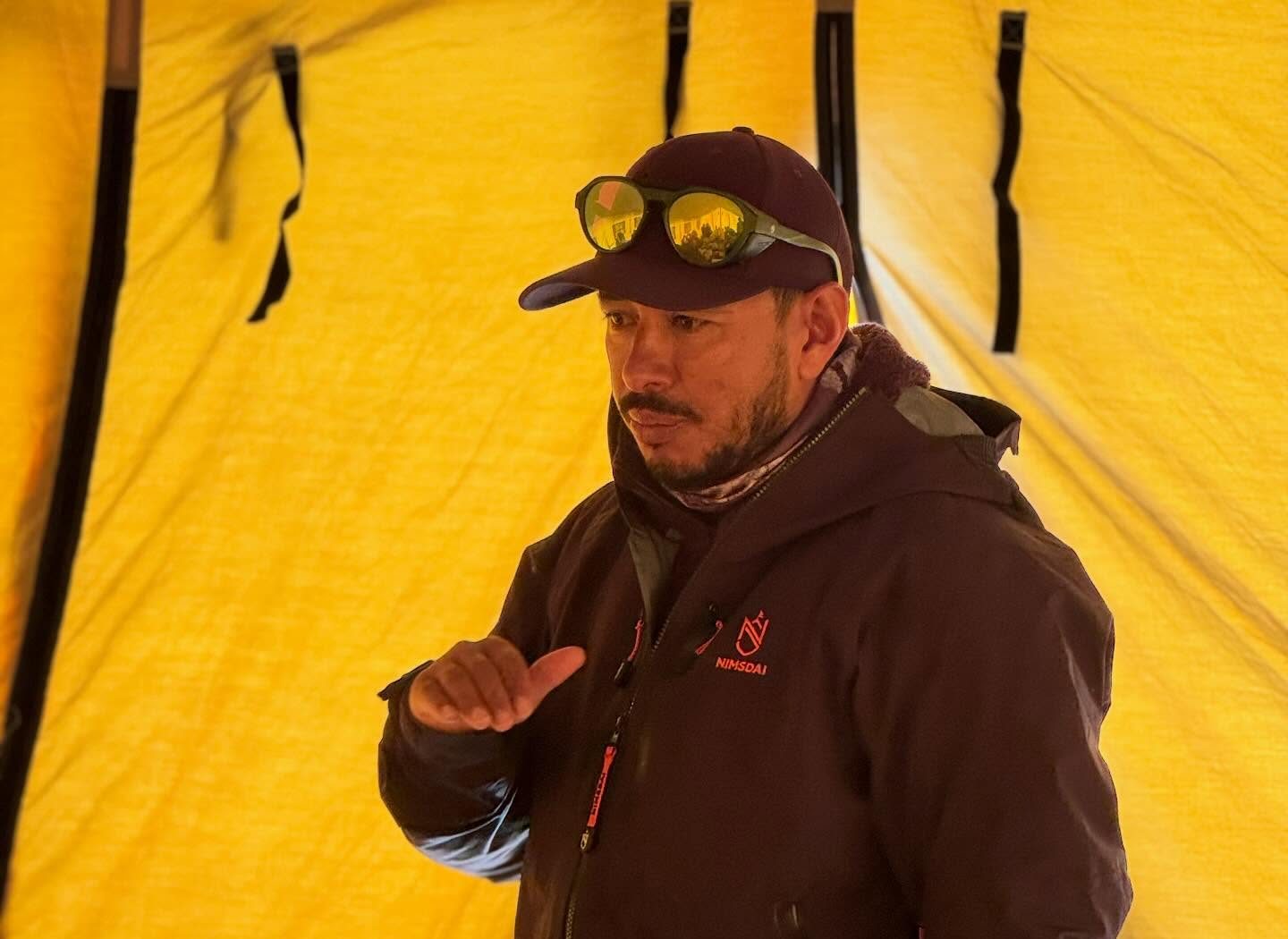
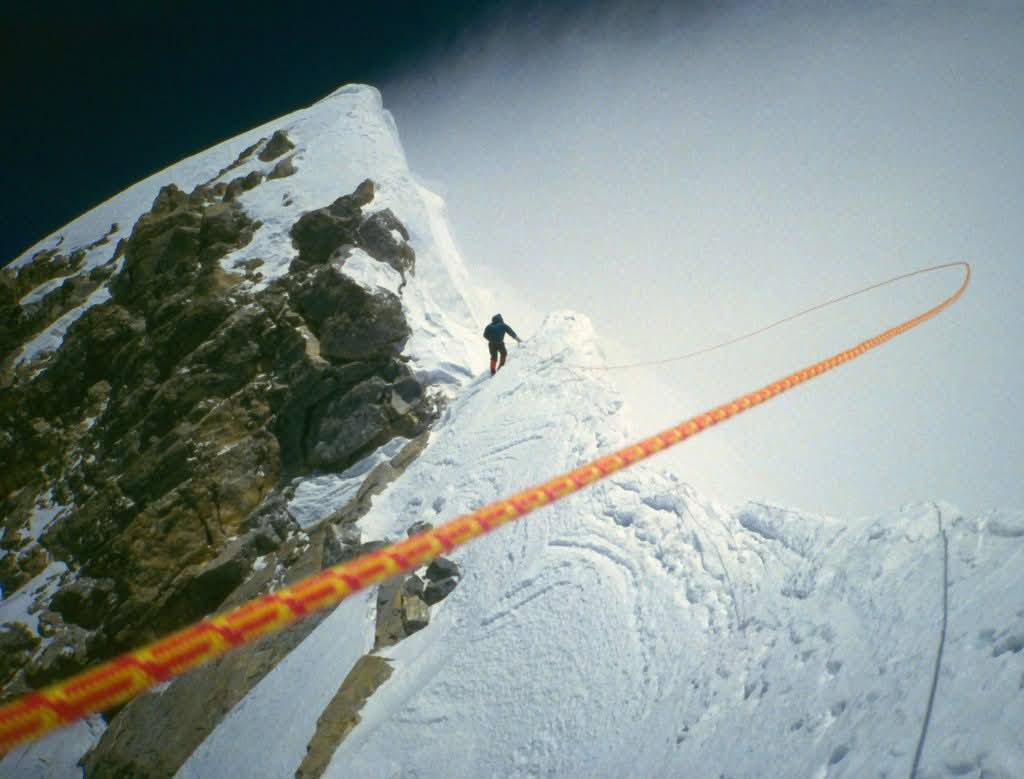
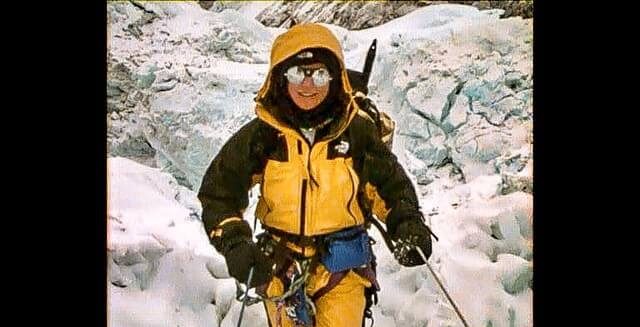
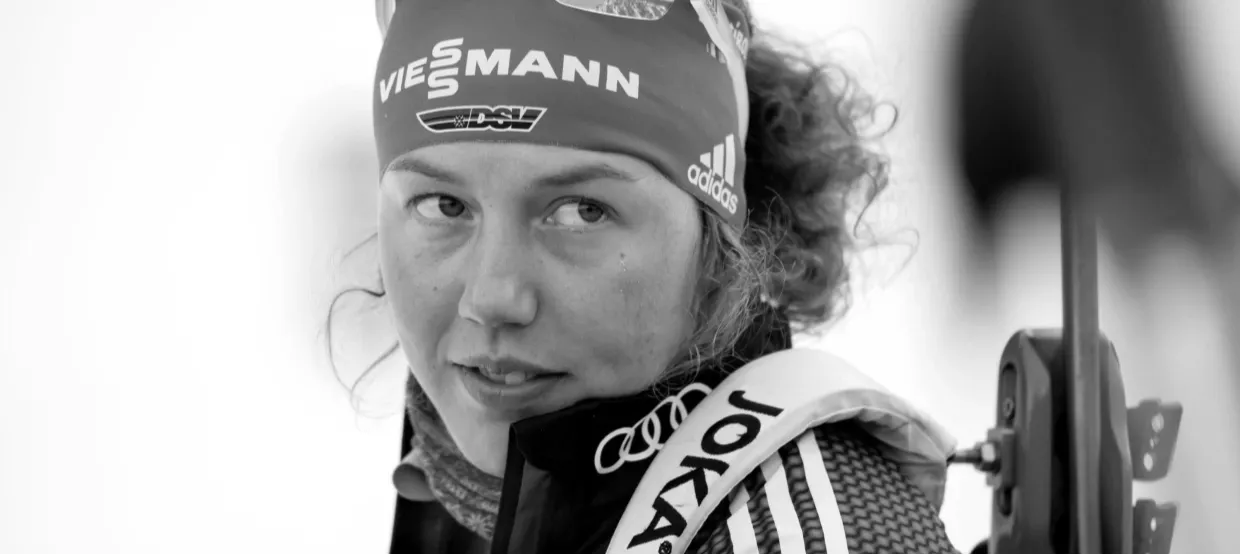
Legend among the legends.